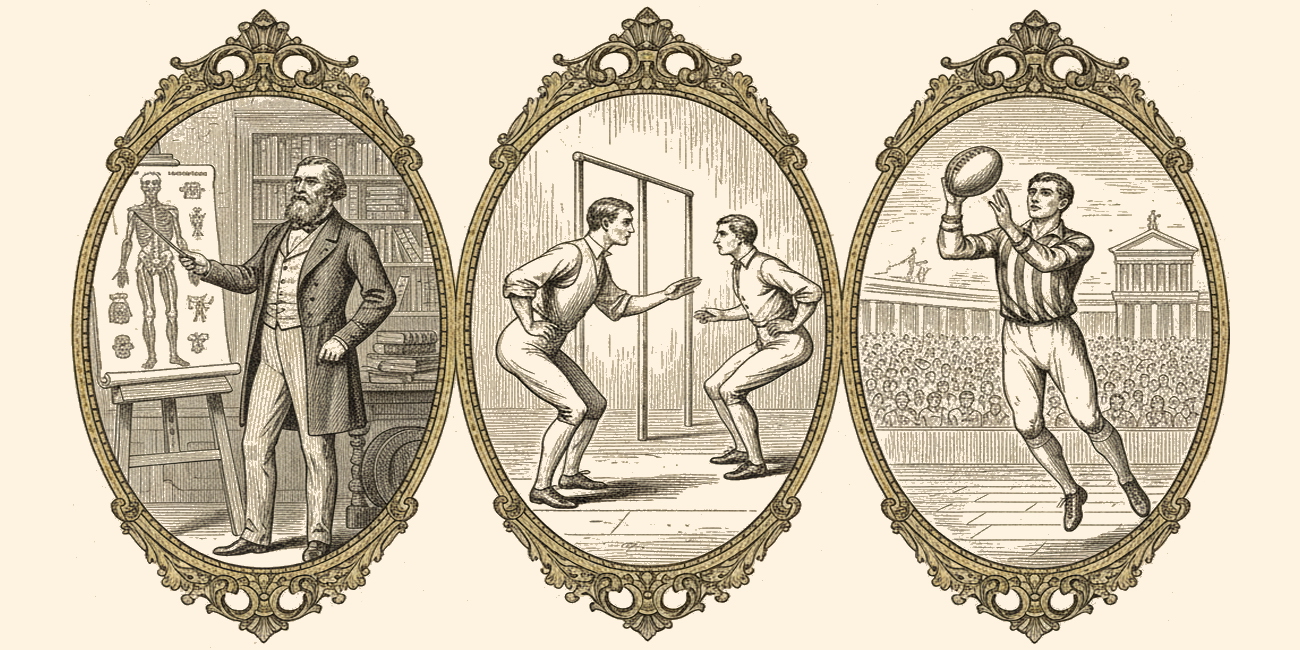
A lasting system of physical education must rise from ordered layers. Each level creates the conditions for the next: truth about movement → practical repertory → disciplined application → expressive skill under pressure → direct transfer to the tasks that matter most. The five levels, their purposes, and the training approach are outlined below.
I. Kinesiology — The Science of Proper Movement
Level One establishes the foundation. It defines the criteria of proper movement—alignment, joint paths, bracing and breathing, muscle synergies, and the mechanical principles that make motion safe and efficient. Its practical aim is clear: to establish reliable positions and basic motor patterns so the nervous system reproduces them consistently. Training is deliberate and precise: slow, focused practice, joint-by-joint checks, targeted corrective drills, and technical assessment.
The kinesiologist leads this work. They design optimal movement patterns, identify deviations from those models, and correct them with targeted interventions. They teach dependable positions and control through observation, simple tests, hands-on assessments, and focused drills. They also advise coaches on joint health and secure the safe foundation on which all further training depends.
II. A System of Movements — Building Physical Culture
Level Two translates kinesiology into a coherent, graded library of movements — squats, lunges, pulls, presses, twists, single-leg work, and transitions — whose purpose is movement literacy. Training uses linked sequences, and systematic progressions. This ensures that the correct mechanics are learned and secured before load is introduced. Practice emphasizes precise coaching, repeatable patterns, and gradual increases in complexity across contexts.
The physical educator or movement coach leads this level. They teach physical culture, which will undoubtedly serve as the foundation for any physical activity and training in the future. They design the curriculum, provide clear cues and feedback, and coordinate with kinesiologists to ensure movements are safe, scalable, and ready for later application.
III. Methodology for General Physical Preparedness — Applying the System
Level Three is Methodology: the art of turning a movement library into reproducible adaptation. It defines program design — intensity, volume, time-under-tension, rest, density, progression, session and cycle structure, and recovery — and prescribes how to combine these parameters to develop strength-endurance, tissue tolerance and integrated control. Training at this level demands deliberate parameter selection, logical session design, objective monitoring of technique and fatigue, and steady, measured progression.
The strength-and-conditioning coach — the GPP specialist — leads Level Three. They translate the movement architect’s exercises and the kinesiologist’s cues into periodized programs, choose and sequence parameters, design sessions and training periods, and select tests and metrics to track skill, capacity, and load. They manage recovery, modify prescriptions when performance or overload markers require it, and ensure movement literacy becomes durable, task-ready preparedness.
IV. Agility in Time and Space — Dynamic Application Under Change
Level Four trains the coupling of perception, decision, and action under changing conditions. It develops timing, reactive control, and adaptive movement. It improves passing and receiving while running, cutting around an opponent, and recovering on an unexpected surface. Agility under body contact trains the athlete to sense, absorb and redirect external forces while preserving balance, posture and decision-making. This allows them to create or exploit space without technical collapse. The aim is straightforward: ensure correct technique is available at speed and under uncertainty. Training employs sensory-motor integration, progressively unpredictable drills, small-sided games, and constraint-based practice.
The skill-and-agility coach leads this work. They design and develop perceptual-motor drills, calibrate complexity from predictable to unpredictable, measure response speed and execution quality, and coordinate with the strength and conditioning coach. This guarantees that agility improves from reliable technique and adequate capacity.
V. Sports- or Job-Specific Tasks — Direct Transfer to the Vocation
Level Five converts preparation into the exact tasks of the sport or job and teaches those tasks directly—specific drills, tactics and full-context practice so technique, capacity and perception meet real demand. It starts with task analysis (movement, metabolic, perceptual, environmental) and progresses from controlled rehearsals to increasingly faithful simulations. First, technical drills and tactical work are added. Then, speed, load, time pressure, sensory limits, and opponent interaction are added until the full task is replicated. Use real equipment and clothing. Practice making decisions by doing tactical scenarios. Scale exposure with graduated loading, planned recovery, and objective fatigue markers. This will build tolerance without breakdown.
The task specialist—sport-specific coach or occupational trainer—is the leader of this level. They translate task analysis into concrete drills and tactical sequences, teach execution and decision-making in context, sequence practice from rehearsal to scenario, and coordinate with the strength and conditioning coach. They monitor performance and safety and adjust fidelity and load so skill and capacity transfer reliably to the real task.
Final Thoughts
These five levels comprise a single, ordered art form that ranges from understanding the truth about movement to faithfully executing the task at hand. Train in sequence and in conversation with one another. Each level provides the conditions required by the next. Gaps discovered at higher levels guide precise refinement at lower levels. As you progress, value clarity and measurement. Teach the movement, build capacity with method, and emphasize perception and decision-making. Then, rehearse the real task in a faithful context. An athlete who neglects this sequence will stall their progress and risk injury. Above all, practice with patience and purpose. Steady, measured exposure and honest feedback transform technical knowledge into dependable performance and lasting resilience.